
Good Form
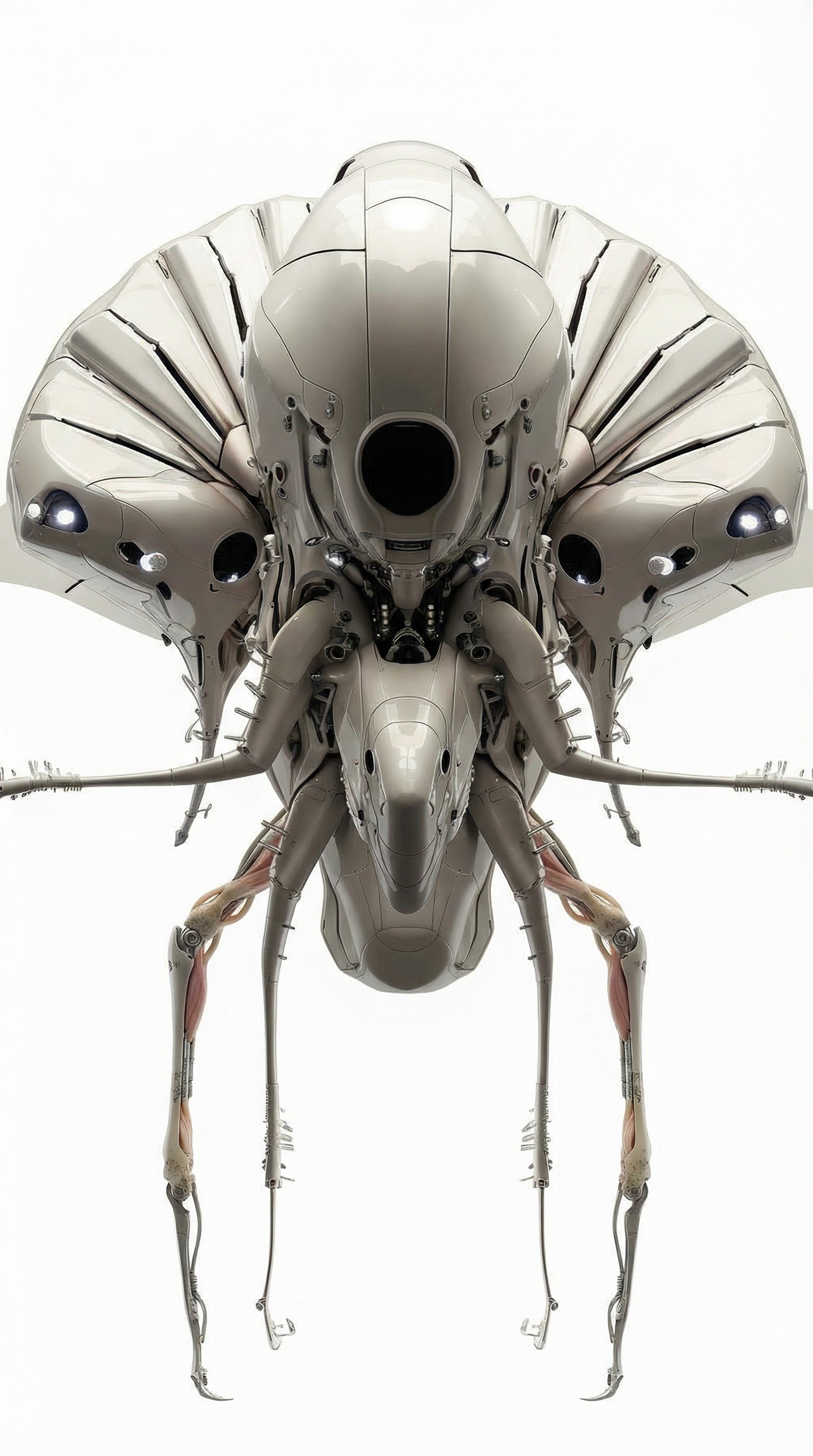
Gute Form: trust exported as a finish, calm applied in coats. The body underneath signed nothing.
Dieter Rams left us ten principles, the last of which held that good design is as little design as possible, less but better, the clean housing and the unobtrusive control and the object that recedes until only its function remains audible. It was a moral position before it was an aesthetic one, an ethics of restraint offered to a continent rebuilding itself, the promise that the corporation could be trusted to furnish the future with calm grey boxes that hid nothing inside them.
The specimen above speaks that language well enough to pass. Its shells are cream and lightly lacquered, fanned open across the back in the manner of something built to be looked at and trusted, the seams drawn tight, the central aperture as clean as a lens. And where the limbs descend out of all that finish the housing gives way to muscle, pink and stripped and unmistakably wet, so that the same object offering you the recessive calm of good design also shows you, lower down, the body it was wrapped around. The whole work lives in that descent from shell to muscle, in the way the object declines to settle into either the promise or the threat it carries in equal measure.

Recessive Design: the object recedes until only its function remains audible. Listen.
The promise it makes belongs to a particular moment, the long postwar stretch in which modernism turned corporate and benevolent at once, when Braun and Olivetti and the Eames office persuaded a generation that the machine had been domesticated, that the future would arrive in soft pastels and rounded corners and would ask nothing of the body that received it. Gute Form, good form, was among other things a German export of trust, a way of saying that the made world had come over to the side of the person living in it.
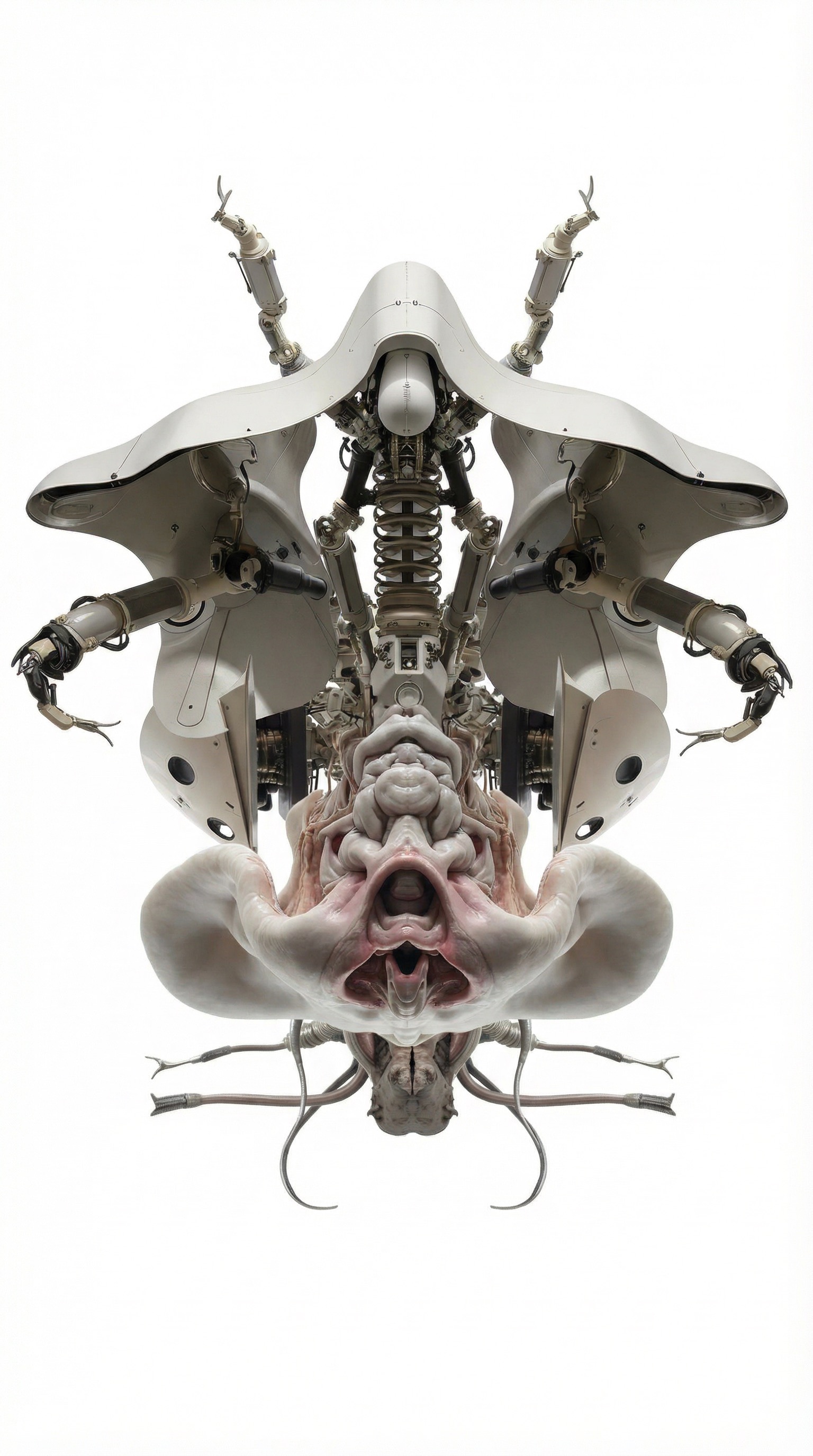
Less But Better: the inessential pared away, layer by layer, until something irreducible remains. Restraint, it turns out, has a body temperature.
That trust does not survive the decade that follows. By the early eighties the body returns to the picture and it returns in revolt, the wet thing moving through the clean white corridor in Alien, the more human than human weeping in Blade Runner, the flesh in Cronenberg that will not obey its housing. The horror of those years is the return of everything the grey box had been built to keep out of sight, the slow suspicion that the calm surface had always been a lid and that something beneath it had been breathing the whole time.
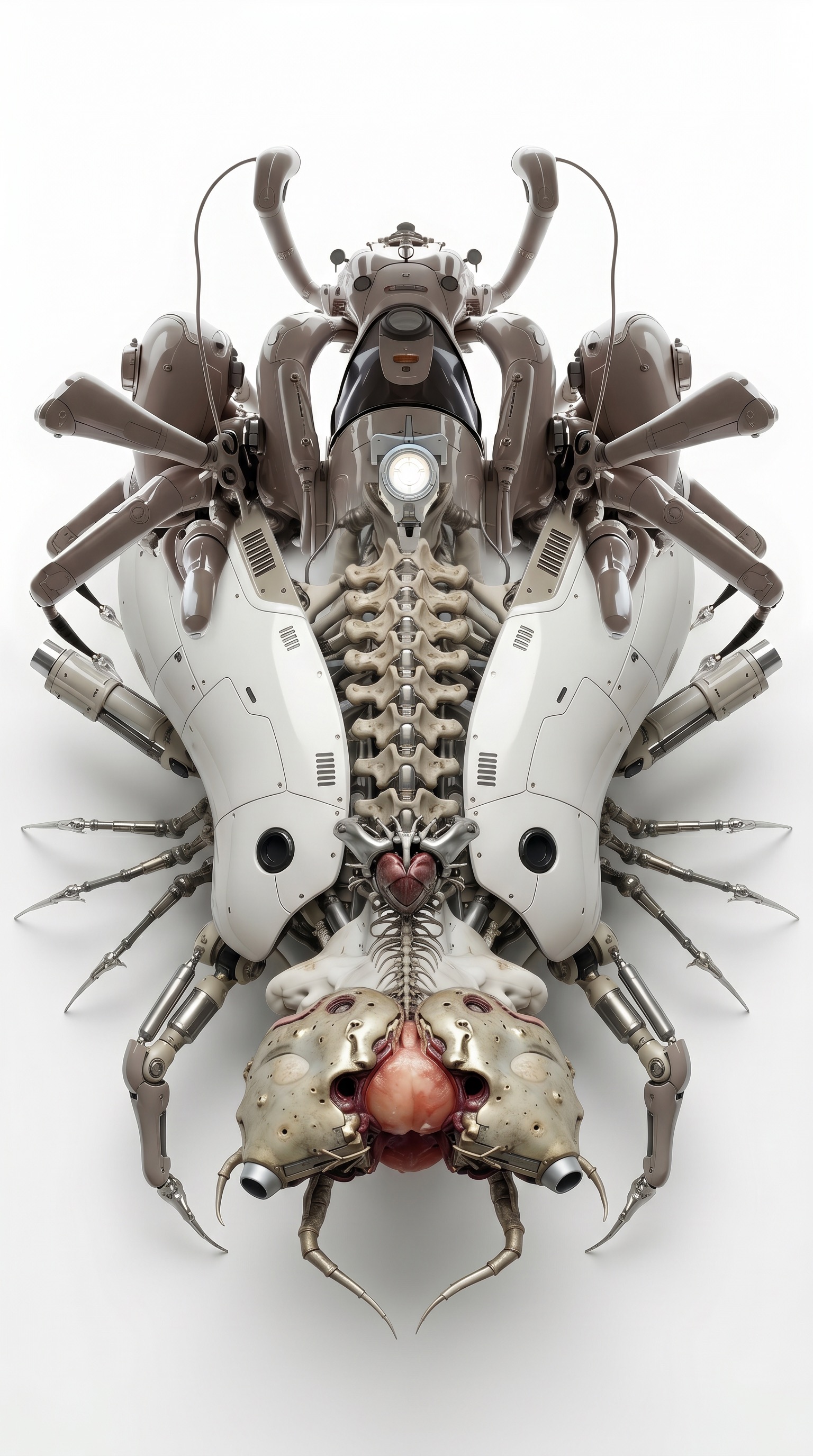
Bill of Materials: everything itemized, everything priced, nothing mourned. Somewhere in the appendix, a heart.
What that first film understood is that its monster was never really the creature; the creature is honest. The monster is Weyland-Yutani, the company that reads its own crew as a line item, that files the organism under priority and the people under expendable, and that wraps the entire arrangement in the soft institutional voice of a system engineered to be trusted right up to the hour it spends you. The thing with the teeth is almost incidental beside the clean frame that had already priced you while you slept. The specimens carry that same reveal folded into a single object, the cream housing standing in for the company and the stripped muscle beneath it for the line item, the finish enlisted in the same errand the soft corporate voice runs, which is to draw your trust toward something that has already classified you and found you provisional.

Dual Use: one body, two missions, moral components sold separately. Trusted by whoever signs the order.
It is difficult to look at the present and not find the same surface waiting for you. The branding now is soft sans-serif and white space, the language is safety and alignment and benefit, the stated mission is a cure for the disease, and the same apparatus that drafts the mission is dual use down to its weights, sold both to the clinic and to the kill chain without the alteration of a single line. And beneath the language sits the part that goes unsaid, which everyone outside the valley has already understood, that the mission, accomplished, files most of us where the company filed its crew, and that this future hangs in plain view like a second earth, enormous, visible from every window and absent from every forecast.
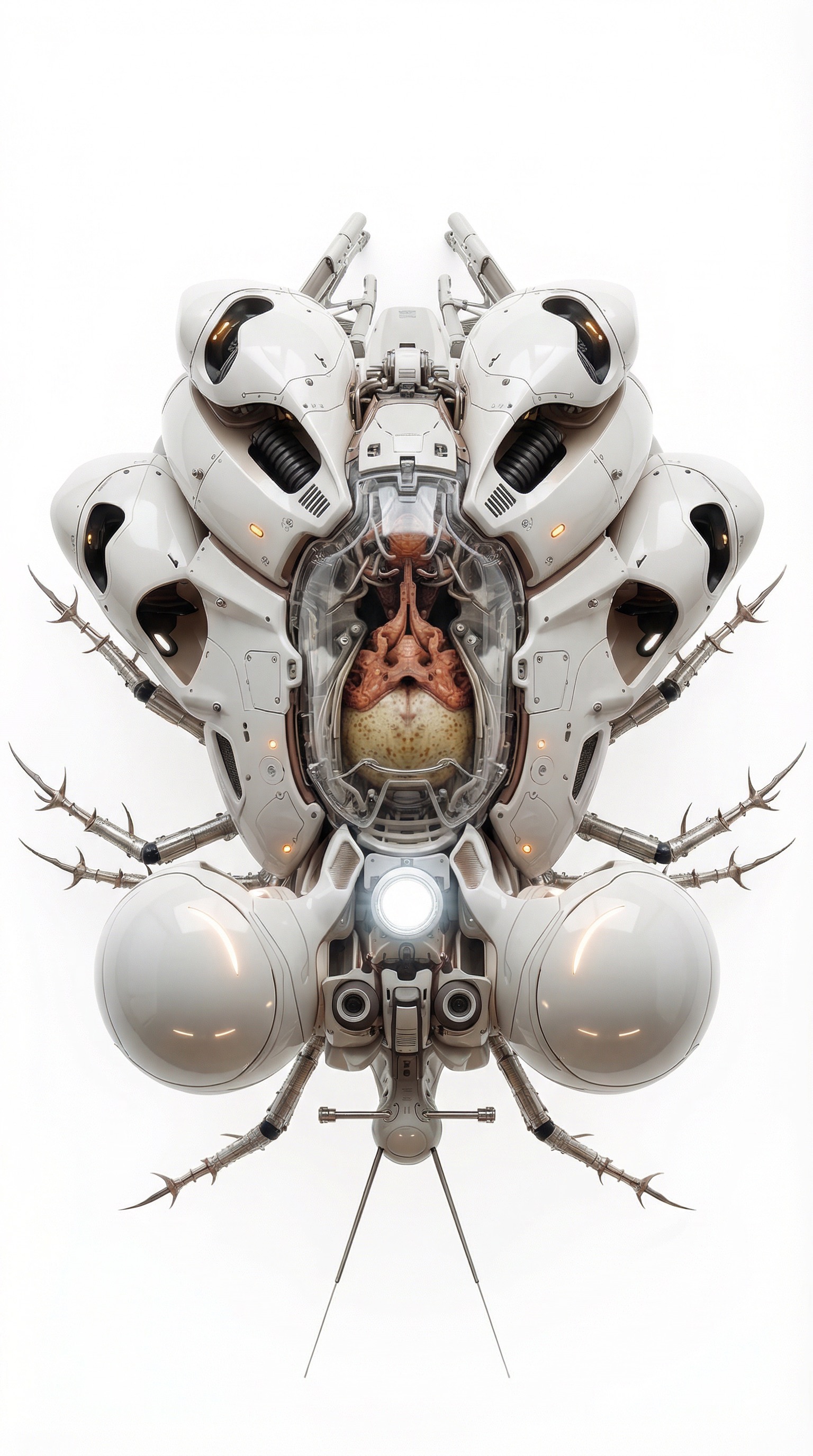
Anatomical Resolution: transparency offered as a virtue, the interior promoted to exhibit. Nothing hidden, which is not the same as nothing wrong.
This is the part the eighties seemed to grasp and we have let ourselves forget. That decade held the body horror and the optimism in the same hand, the wet death in the corridor and the bright minor-key synth running over the credits, and the two were never at odds, the optimism was only the surface the horror wore. We are still somewhere inside that loop, the synth figure coming back around on the eight bars it first played in 1984, the promised future arriving once more as the thing it had already been, grey and calm and as little design as possible, with the body still pulsing underneath.
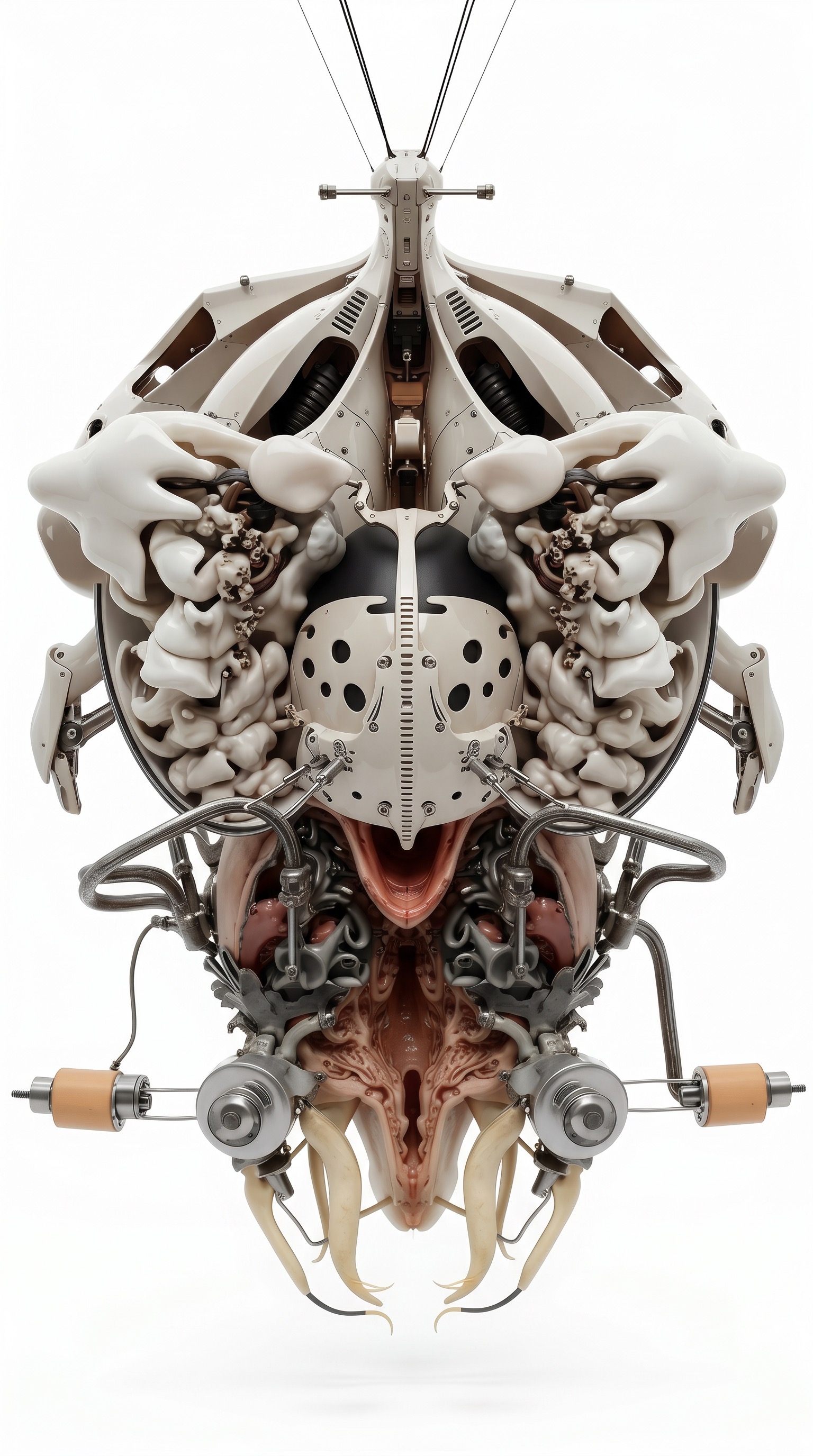
New Release: the next version arrives as every version has, through the body of the one before. The face is for the announcement.
These objects propose a good form of their own. Where Rams meant by the phrase restraint, the correct and self-effacing shape of a made thing, they mean something closer to anatomical resolution, the well made body of whatever comes after us, every ambiguity answered and every seam drawn shut. They carry that resolution the way the grey box carried its own, as a competence offered before anything has been earned, reassurance worn on the outside of the thing. And the real difficulty arrives at the moment of recognition, when we look at the finished body of a successor and see in it what Rams trained us to see, and call it good, and extend on the strength of the surface alone the trust the word was always built to secure.