
Out of Distribution: Beauty Beyond the Algorithm’s Comfort Zone
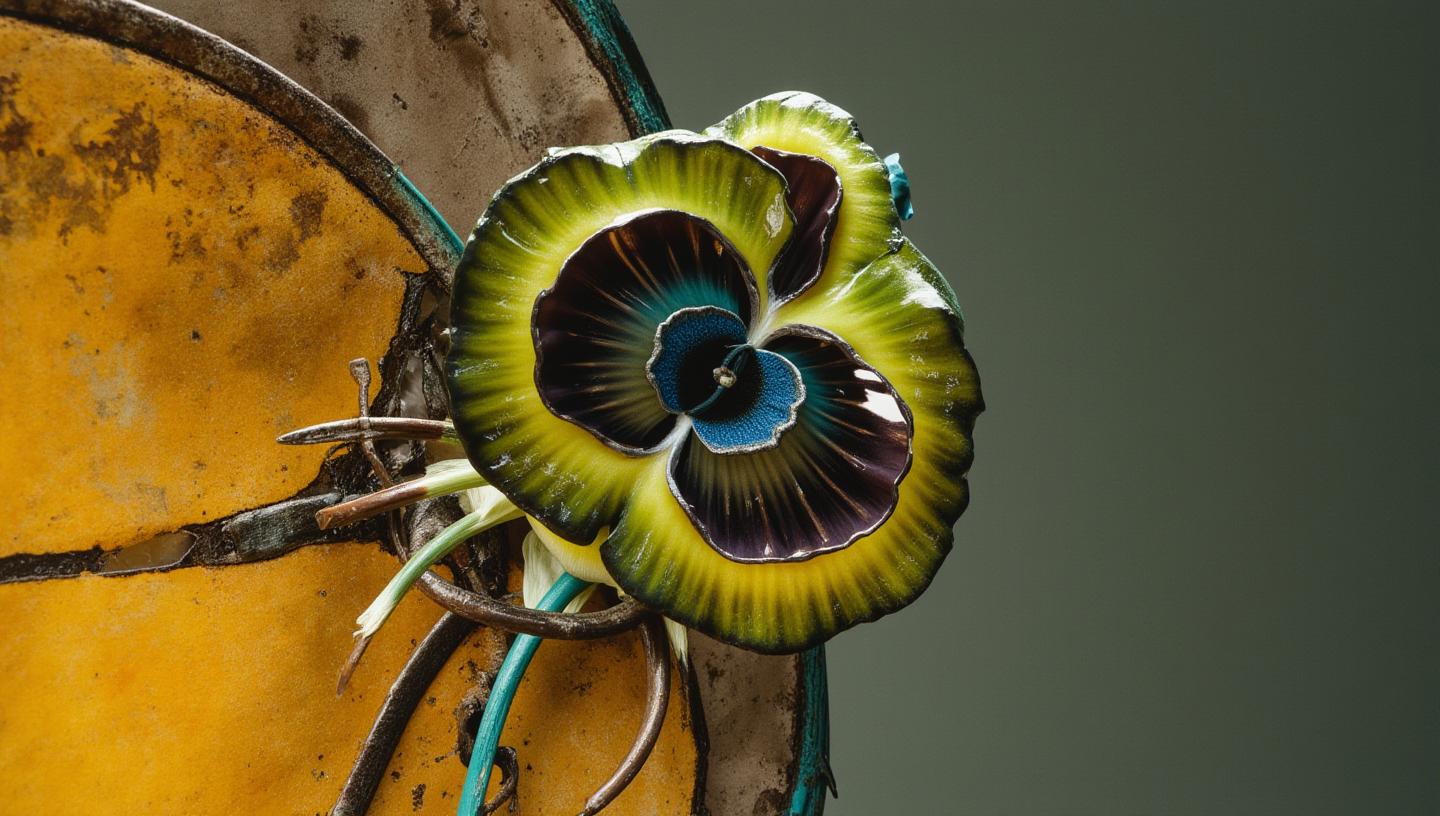
In his book Saving Beauty, philosopher Byung-Chul Han argues that contemporary culture has reduced beauty to mere pleasantness, a smooth, consumable aesthetic that demands nothing of us. True beauty, Han insists, must wound. It must confront us with alterity, with something genuinely Other that resists our attempts at easy assimilation. Beauty, in this sense, is not comfortable. It happens to us, overwhelming our defenses, forcing an encounter we did not choose.
This framework offers unexpected insight into why most AI-generated art fails aesthetically while certain approaches succeed. The failure isn’t technical, current models can produce technically accomplished images. The failure is philosophical: they produce beauty that is too smooth, too familiar, too eager to please. They sample from learned distributions, creating endless variations of what already exists. In Han’s terms, they are pornographic rather than erotic, immediately consumable rather than enigmatic.
The Tyranny of Distribution
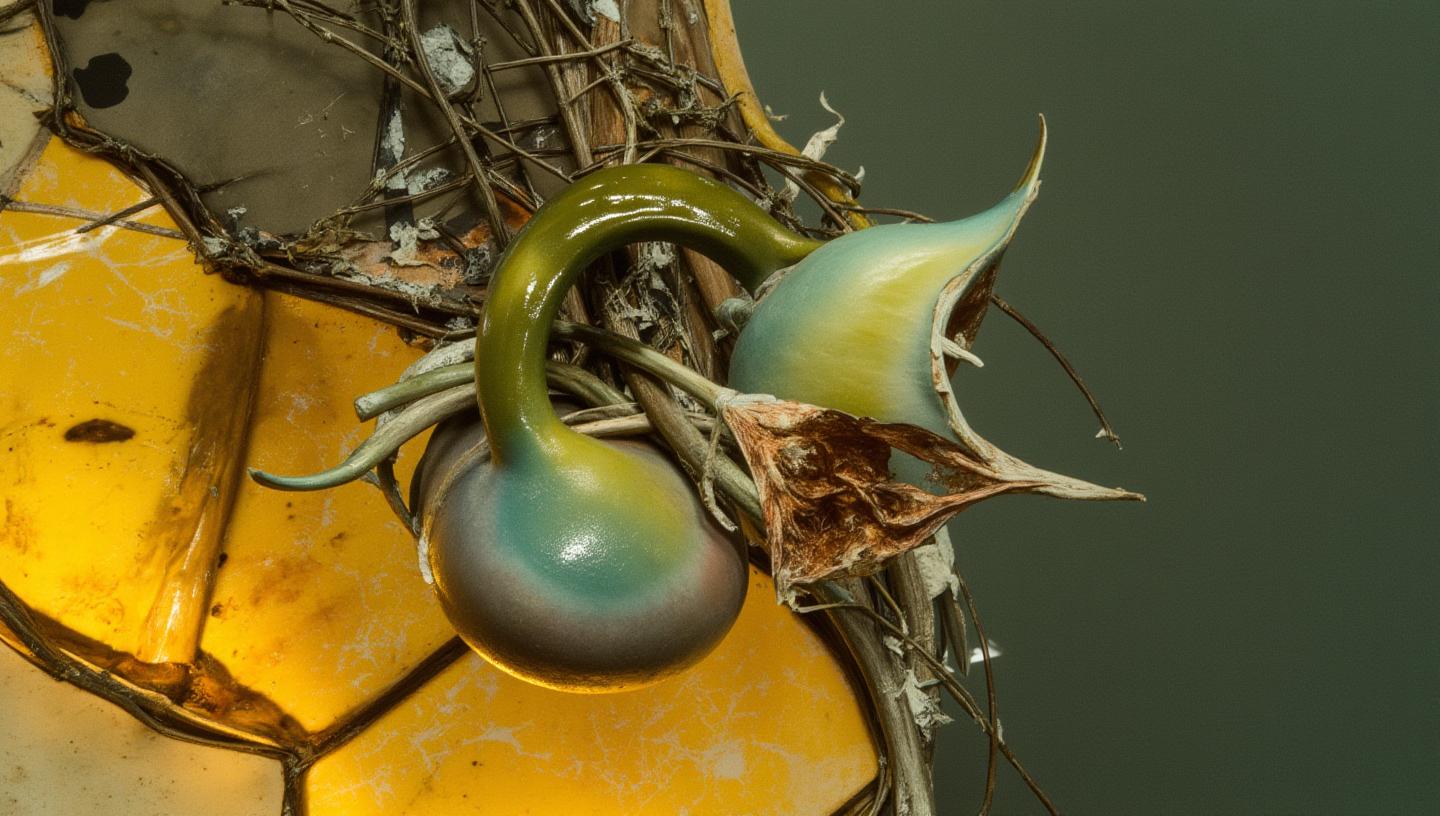
Rhizome Logic: not variation, not homage, an organism assembled from misaligned priors. The bloom as negotiation between irreconciled logics.
A model’s training distribution represents the statistical territory of everything it has learned, the accumulated patterns, relationships, and aesthetic priors embedded during training. When generating images, the model naturally seeks outputs that fall within this distribution. Loss functions reward familiarity and penalize strangeness. The model’s comfort zone is its training distribution.
Most AI art remains firmly in-distribution. Users prompt for “a beautiful landscape” or “a portrait in the style of Vermeer,” and the model confidently produces variations on what it knows. These images may be technically impressive, but they offer no genuine encounter with alterity. They are smooth in precisely Han’s sense, polished surfaces that reflect our desires back to us without transformation.
And smoothness, here, is not just an aesthetic condition but an infrastructural one. Diffusion models inherit the logic of platforms shaped by recommender systems, preference optimization, and engagement maximization, systems designed to reinforce what users already like. Novelty becomes computational risk. The visible, the popular, the repeatedly consumed rise to the top of datasets. Even before the model generates anything, the training set has already been sorted by cultural smoothness. Distribution becomes destiny.
This is the aesthetic of consumption. We feed the model our preferences, and it returns optimized versions of what we already want. There is no wound, no rupture, no genuine otherness. The algorithm becomes another machine for producing smoothness, flattening the rough edges where beauty might actually occur.
The Three-Way Collision
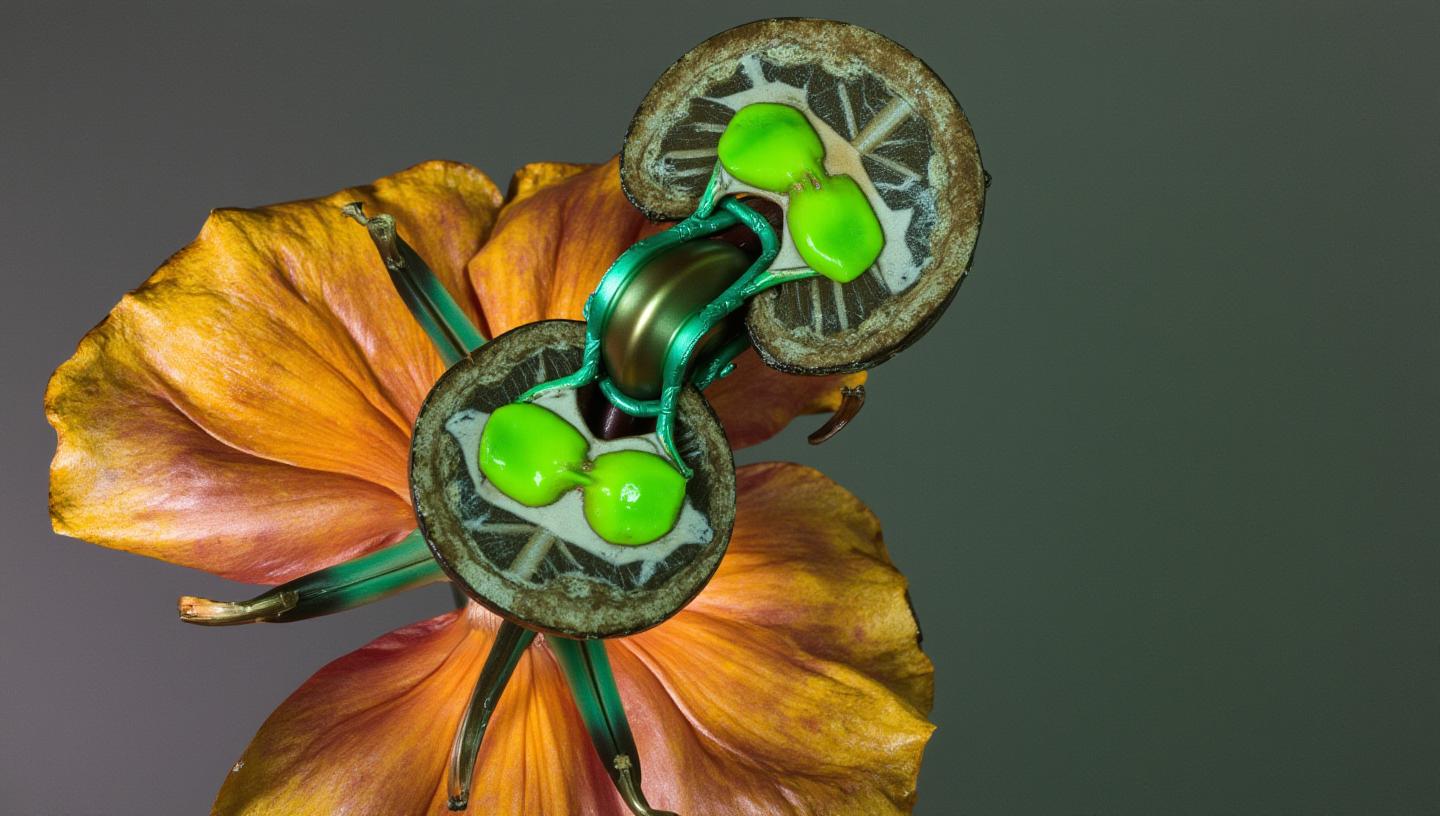
Botany of Rupture: forcing systems beyond their comfort zones until the unforeseen takes root. Replacing optimization with collision.
But what happens when we force the model out of its comfort zone, when we create conditions that make in-distribution outputs impossible?
One methodology: design procedural algorithms that generate geometric forms; process these through a diffusion model fine-tuned on photography, images of bodies, rope, botanical specimens, grain, atmosphere; and frame everything with prompts that push toward industrial specimen language. The result is a three-way collision between incompatible visual languages:
- Training data aesthetic: the muted tones, textural grain, and morphological vocabulary of mid-century Japanese photography
- Input material: bright, mathematically-generated procedural geometry the model has never encountered
- Prompt constraints: industrial and biological framing that pushes interpretation in yet another direction
None of these three forces speaks the same language. The model cannot default to familiar patterns because the procedural input won’t allow it. It cannot ignore its training because those aesthetic priors leak through regardless. It cannot disregard the prompt because that shapes the interpretive frame.
Post-war Japanese photography developed an explicit anti-aesthetic, grainy, high-contrast, deliberately rough, that refused the smooth legibility of Western commercial imagery. Where American photography of the era pursued clean lines and glossy surfaces, these photographers worked in the ash of industrialization, in cheap hotels under raw flash or fluorescent tubes, in dirt and grain. The bodies they photographed were bound, contorted, laid bare in conditions that emphasized constraint rather than liberation. This was not failed technique but philosophical stance: beauty that wounds rather than flatters, that resists the eye’s easy passage across the image.
This is the vocabulary the model inherits. It learns that skin can be interrupted by rope, that botanical forms grow dense and overlapping in ways that obscure rather than reveal, that grain is not noise but texture with weight. When the model later encounters procedural geometries it cannot classify, it reaches for these learned logics of binding and interruption. The resulting forms carry something of the silent scream, bodies contorted not in graceful extension but in spasm, in constraint, in shapes that register as struggle. The floral morphologies that emerge are not decorative. They twist with the energy of something bound, something that cannot unfold cleanly, something marked.
The result is genuine struggle. The model must improvise morphological bridges between incompatible ontologies. When it encounters certain topological patterns in the procedural geometry, perhaps structures that echo how leaves branch or how rope binds, it applies learned morphological logic even when unprompted. This is not the smooth operation of staying in-distribution. This is violence to the model’s comfort, forcing it to translate between visual languages it was never meant to reconcile. The model must improvise morphological bridges between incompatible ontologies.
Beauty as Struggle
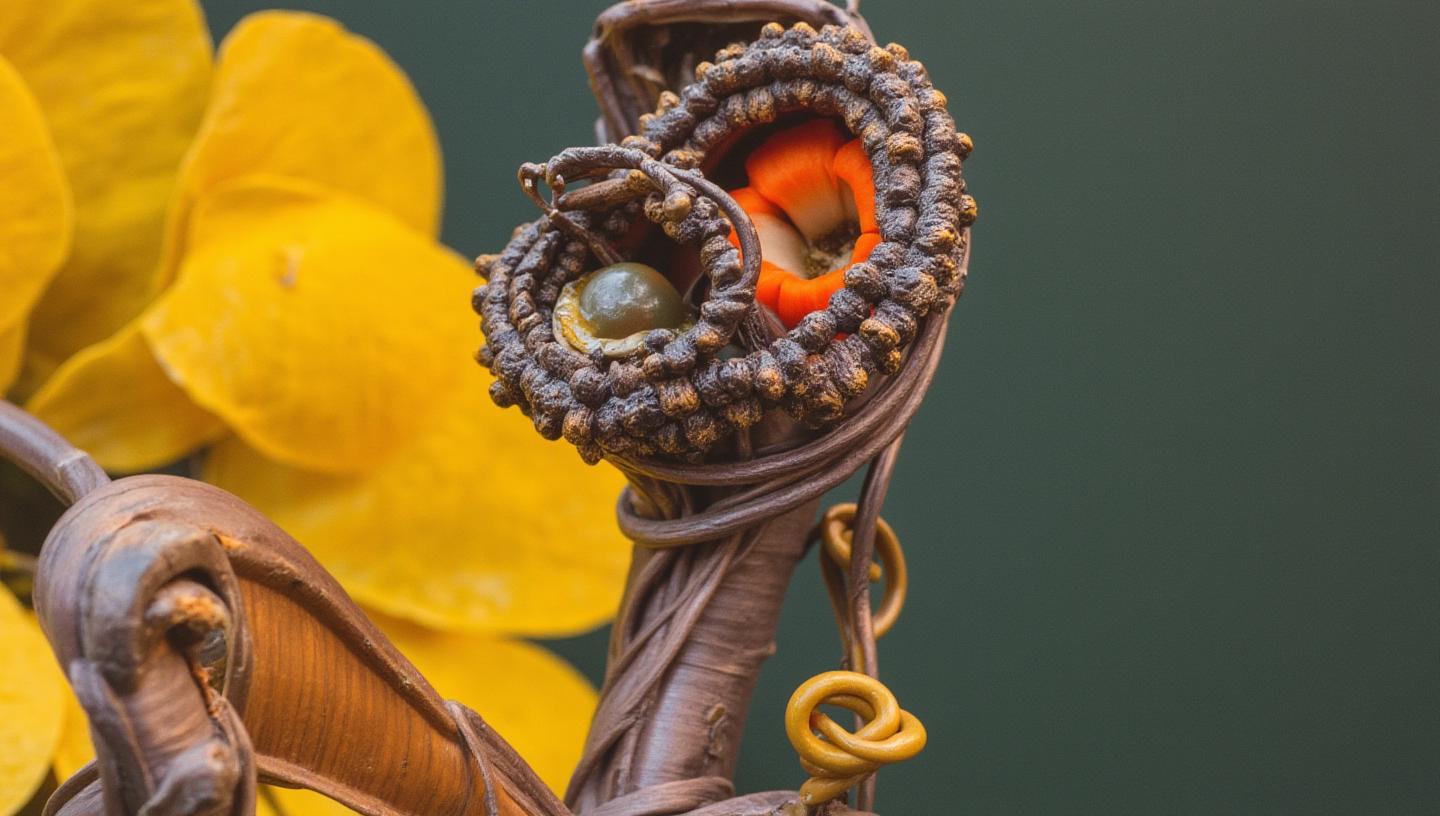
This struggle is where beauty emerges, not from the model’s ease but from its forced encounter with the untranslatable.
When the model encounters geometry it has never seen, it searches for morphological analogies, structures it knows how to interpret. Unprompted leaf patterns emerge because the model learned overlapping botanical planes from photographs of planted fields. Rope-like forms appear because certain constraint geometries resonate with shibari photographs. This is not the model adding objects; it is attempting to solve a representational problem by filtering alien forms through familiar vocabularies.
The outputs come from struggle, precisely because they arise from negotiation between forces that cannot be reconciled. The model cannot produce simple variations on its training, the procedural geometry prevents that. But it also cannot produce pure abstractions, its learned morphologies assert themselves regardless. The result occupies a space none of the three forces could generate alone: xenobotanical forms exhibiting logics alien to both human design and machine training.
This is what Han means when he says beauty must be Other. These forms are not variations on the familiar. They are genuinely strange, organisms from parallel evolutionary pathways, botanical logics that emerge only from forcing silicon and carbon intelligence into unwilling collaboration.
The Palette Conflict and Color Independence
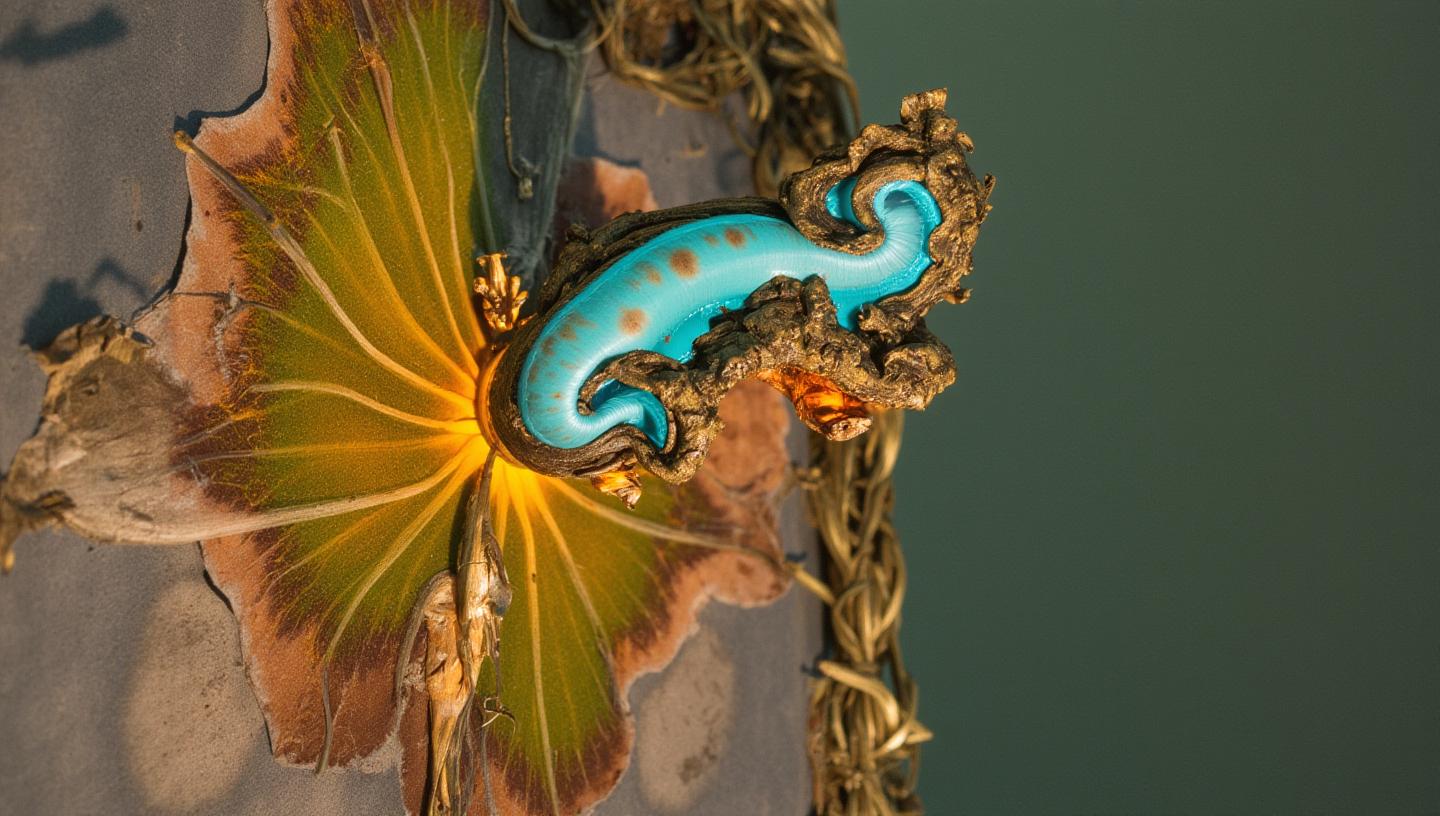
Prototypic Bloom: geometry filtered through photographic memory, structure haunted by invading texture.
Because the training data was monochrome, the model learned form, texture, and structure but not color harmonies. It has opinions about how leaves overlap, how bodies are bound, how grain produces atmosphere, but it lacks opinions about color. The procedural input’s neon or mathematically-coded palettes therefore pass through largely uncorrected. They collide with the monochrome logic of the training in ways the model cannot reconcile.
Form wants to behave one way; color wants to behave another. The model cannot synthesize them into a stable aesthetic because its priors don’t contain such synthesis. What emerges is a palette that feels alien: muted atmospheres ruptured by saturated geometry, botanical surfaces tinted with impossible brightness. Beauty arises through conflict rather than coherence.
The Erotic and the Pornographic
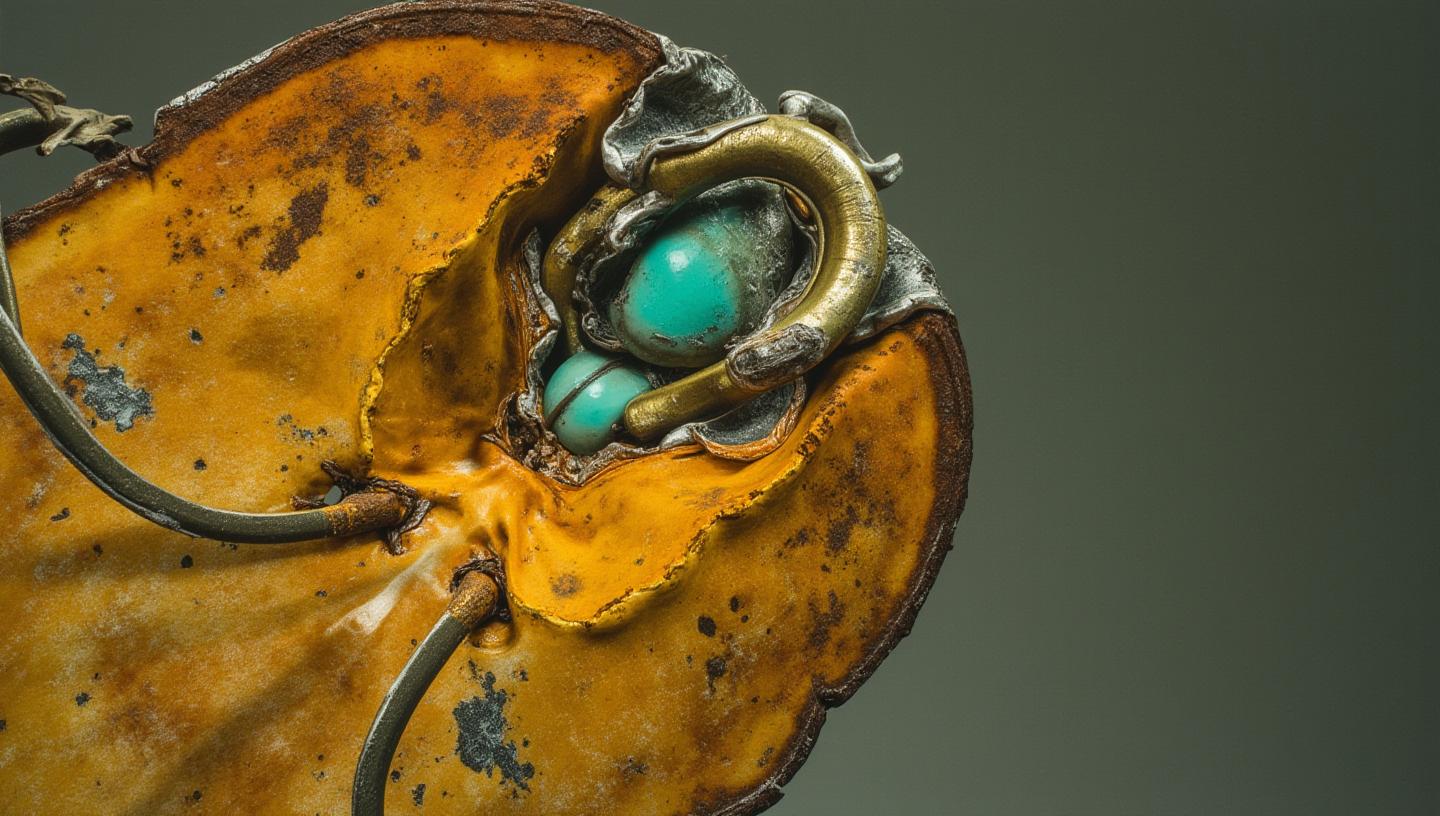
Erotic Distance: an image that withholds, that cannot be consumed in a glance. Beauty sustained by resistance.
Han distinguishes between the erotic and the pornographic, and the distinction maps uncannily well onto in-distribution versus out-of-distribution generation. The pornographic is totally visible, immediately consumable, withholding nothing. Most AI art is pornographic in this sense: the image offers itself up fully and instantly, asking nothing in return. It offers no enigma, no interpretive challenge, no encounter with genuine otherness. It is optimized for frictionless experience.
The erotic, by contrast, resists complete disclosure. It maintains distance. It demands engagement and interpretation. It transforms us precisely because it cannot be fully assimilated. Out-of-distribution work is erotic. It confronts us with forms we cannot immediately place, morphologies that resist classification, beauty that wounds because it refuses to resolve into comfort.
Why This Matters for Machine-Entangled Lives
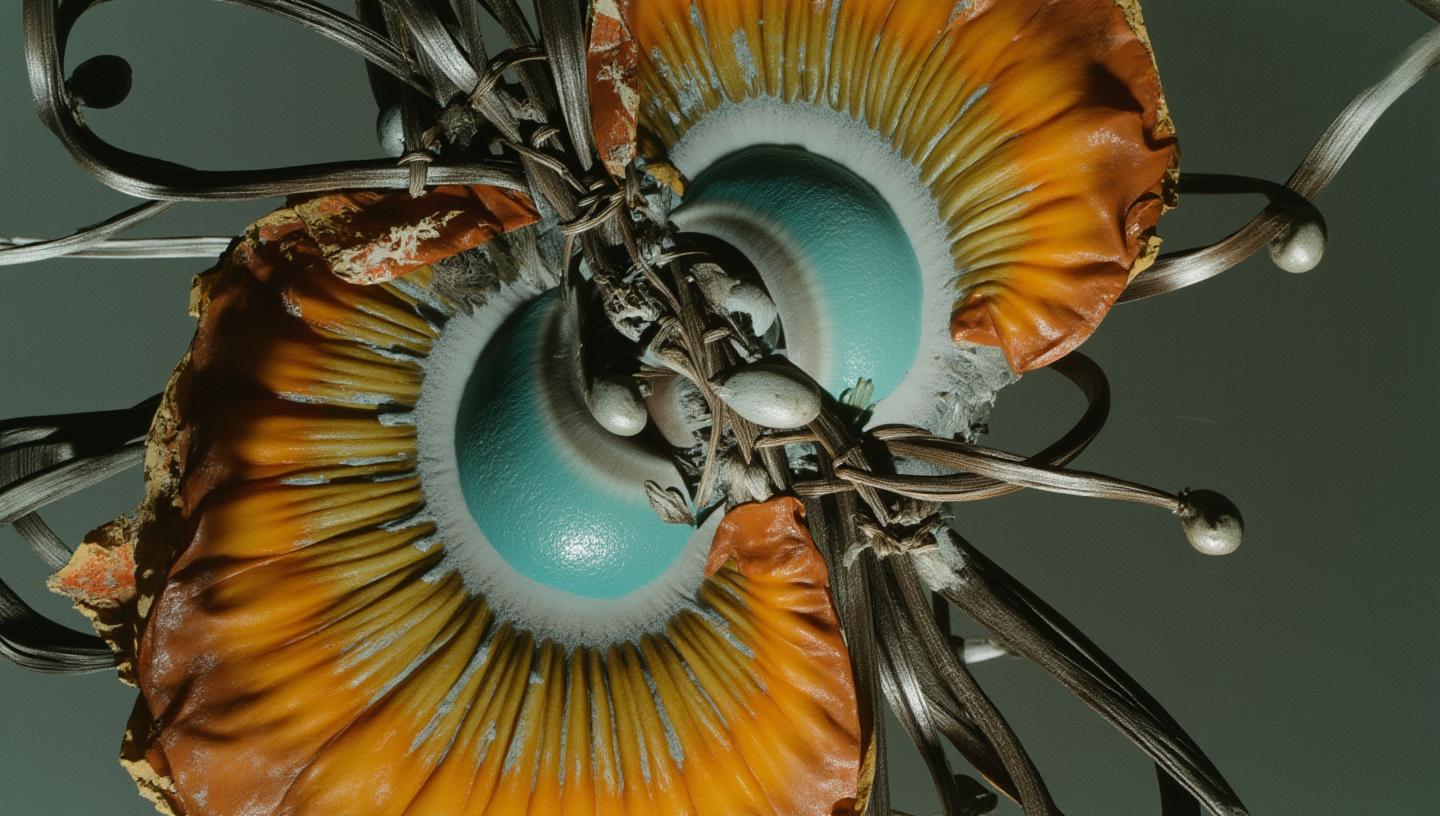
Post-Edenic: paradise routed through circuitry and constraint. Growth under pressure, systems engineered for optimization.
If AI systems only produce in-distribution outputs, they become another technology of smoothness, machines for flattening aesthetic experience into optimized consumption. This is not a technical problem but a cultural and philosophical one. Smoothness has become the default mode of digital life: frictionless interfaces, predictive feeds, everything calibrated toward comfort. To produce or seek only smooth AI images is to reinforce a world allergic to difficulty.
But when we push models outside their comfort zones, whether through procedural geometry, constrained training vocabularies, or conceptual prompts, we create conditions where the system must reveal the edges of its knowledge. We see where its priors fail, where its assumptions collapse, where something unexpected emerges from the wreckage of incompatible logics.
These failures are openings. They are places where the machine reveals not only what it knows but what it cannot know. They are cracks through which alterity enters. They are wounds.
This is beauty, in Han’s sense: not pleasantness, not polish, not optimization, but an encounter. Something that resists, interrupts, unsettles. Something we do not immediately understand.
Toward a Practice of Rupture
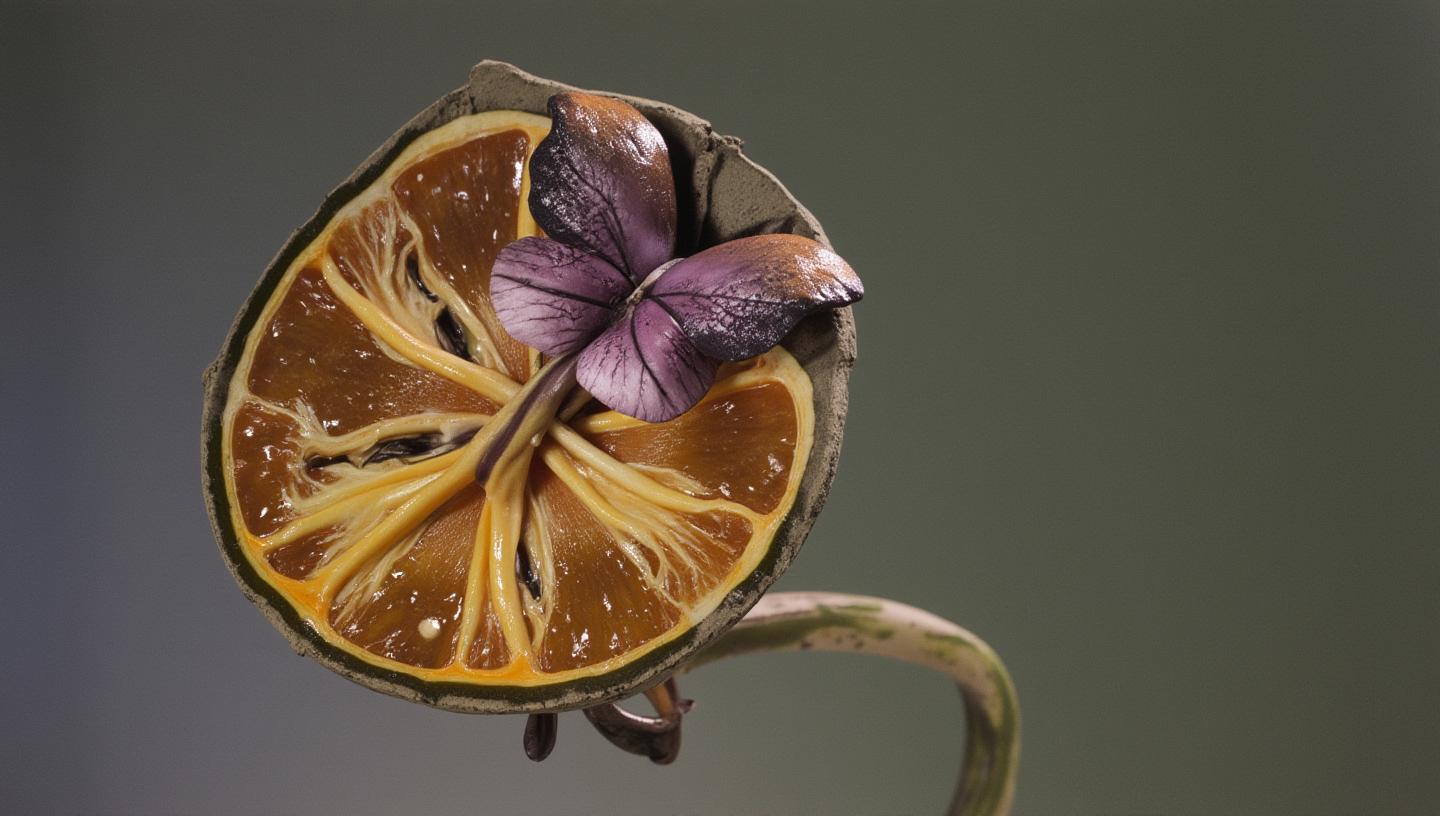
Bound Aesthetics: lacking smoothness, disobedient. Beauty caught in constraint, emerging from forced translation between incompatible vocabularies.
Machine-entangled creative practice does not need better prompts or more obedient models. It needs conditions of rupture, deliberate misalignments, forced translations, situations in which neither human nor machine can dominate. Novelty arises not from the model’s capacity but from the collision between systems that cannot speak the same language yet must attempt to.
We do not need generative systems that give us more of what they already know. We need systems that can be pushed into what they cannot know, where their interpretive strategies fray, where their smoothness fails, where the possibility of genuine aesthetic encounter returns.
What emerges from the wreckage is not optimized, not smooth, not comfortable. It is wounded. And in Han’s sense, this is exactly what beauty requires.