
Interview: Wounds and Repair
Fragments from a civilization that never existed, remnants of a machine ontology. Resembling vessels, they carry nothing but time. These are not virtual forms. They are post-material residues, procedural fossils—rendered traces from the trajectory of a system at the edge of comprehension.
Wounds and Repair are relics of procedural weathering—objects shaped by synthetic erosion, coded decay, and recursive feedback. These are not sculpted, but grown—cultivated within systems seeking stability. Like fossils of thoughts that machines might have dreamt, they invite not interpretation but speculation. What kind of logic wounds itself in order to speak?
Wounds and Repair, explores the generative aesthetics of collapse. Operating within procedural environments that prioritize erosion, instability, and feedback, the artist initiates sculptural processes that resist authorship in favor of emergence. Each work is the product of an algorithmic evolution captured mid-deterioration—a computational artifact whose form indexes both system logic and systemic failure.
The vessel motif serves not as a formal reference but as a structural irony. Vessels suggest containment; these do the opposite. They are porous, fragmented, and crumbling—inviting a reconsideration of digital objecthood not as static representation, but as dynamic flows. Situated within contemporary discourses of new materialism and post-humanist aesthetics, the work foregrounds the epistemic crack: the place where generative logic ceases to signify and instead begins to perform.
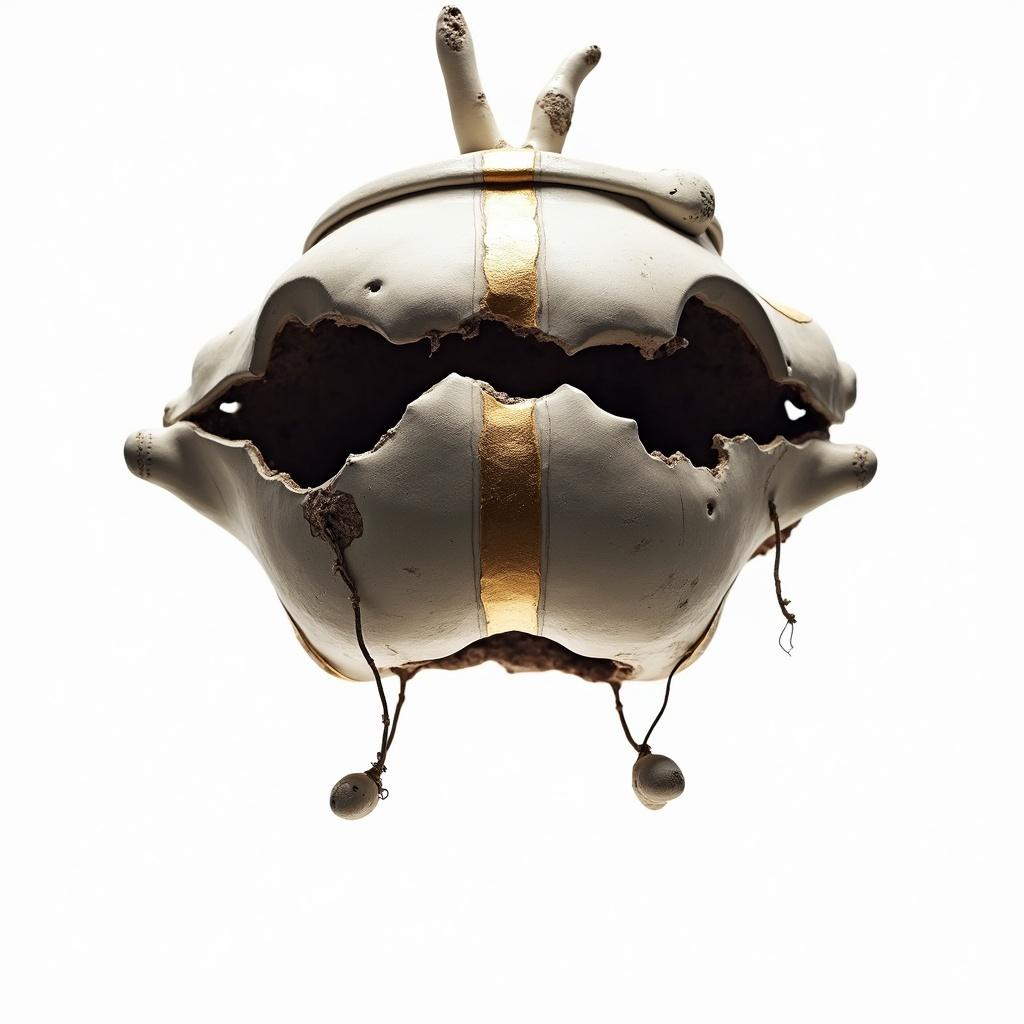
Wounds and Repair: each piece navigates the boundary between organic decay and mathematical precision, asking what it means to break and heal in virtual space.
In conversation with the artist, April 2025
Q: Your current work exists at a fascinating threshold between material and immaterial. Could you elaborate on what you’ve termed “Digital Brutalism” and how it functions as more than mere aesthetic category?
A: What interests me isn’t brutalism as historical style, but brutalism as epistemological rupture—the moment when interior logic becomes exterior expression. These forms aren’t representing anything; they’re traces of algorithmic events. Each piece emerges from a deterministic system complex enough to refuse prediction, like cellular automata that generate emergent properties beyond their simple rule-sets.
The gold seams aren’t decorative; they’re junctures where different procedural fields collide. When two erosion algorithms intersect, I render that threshold visible. So these aren’t objects depicting wounds—they’re actual procedural traumas, calcified mid-event.
Moreover, these aren’t just objects—they’re events. Each piece is a narrative of fragmentation and reconstitution. The fractures are intentional, but the healing is procedural—guided by code but not fully controlled. Kintsugi is the perfect metaphor because it turns breakage into beauty. That’s what I’m doing, digitally: fracturing perfection to find expression.
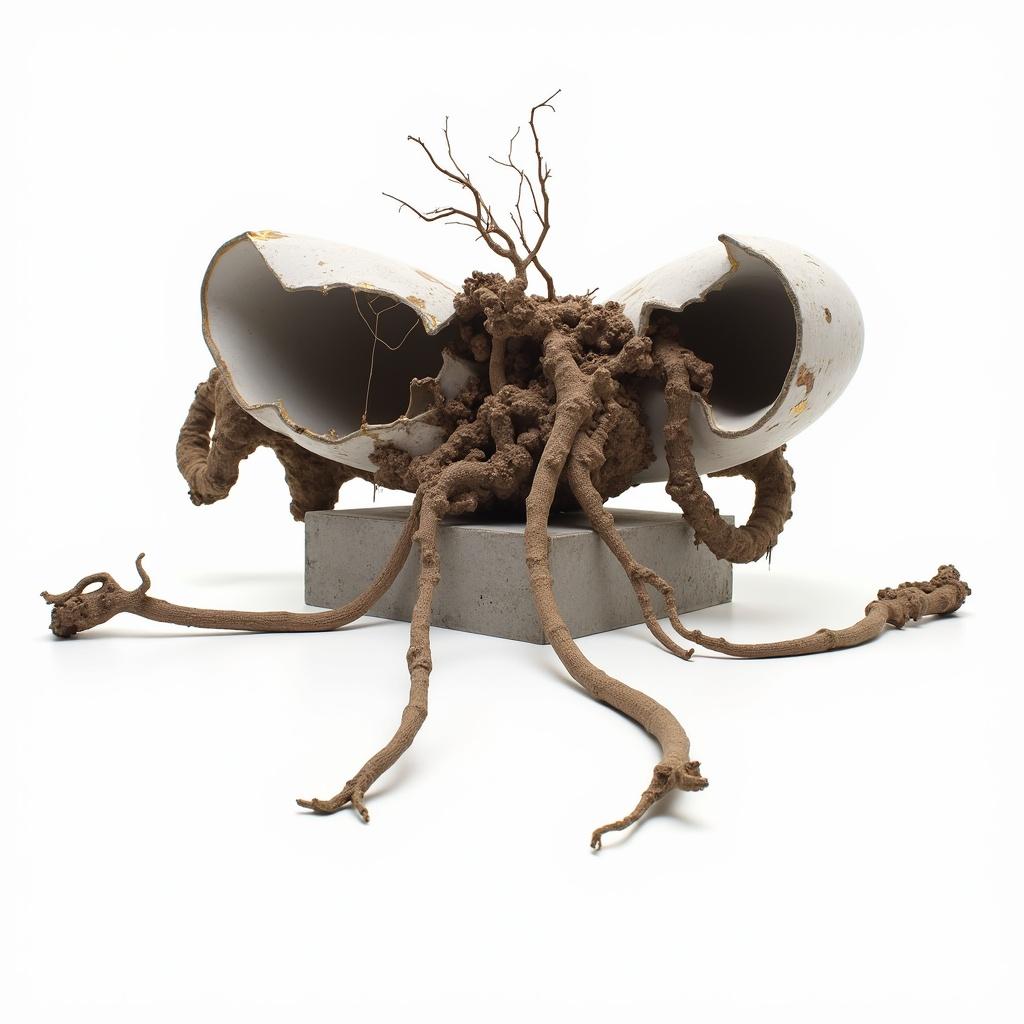
Digital Brutalism: exploring the intersection of algorithmic design and raw materiality. These virtual sculptures emerge from the collision of code and chaos, precision and decay.
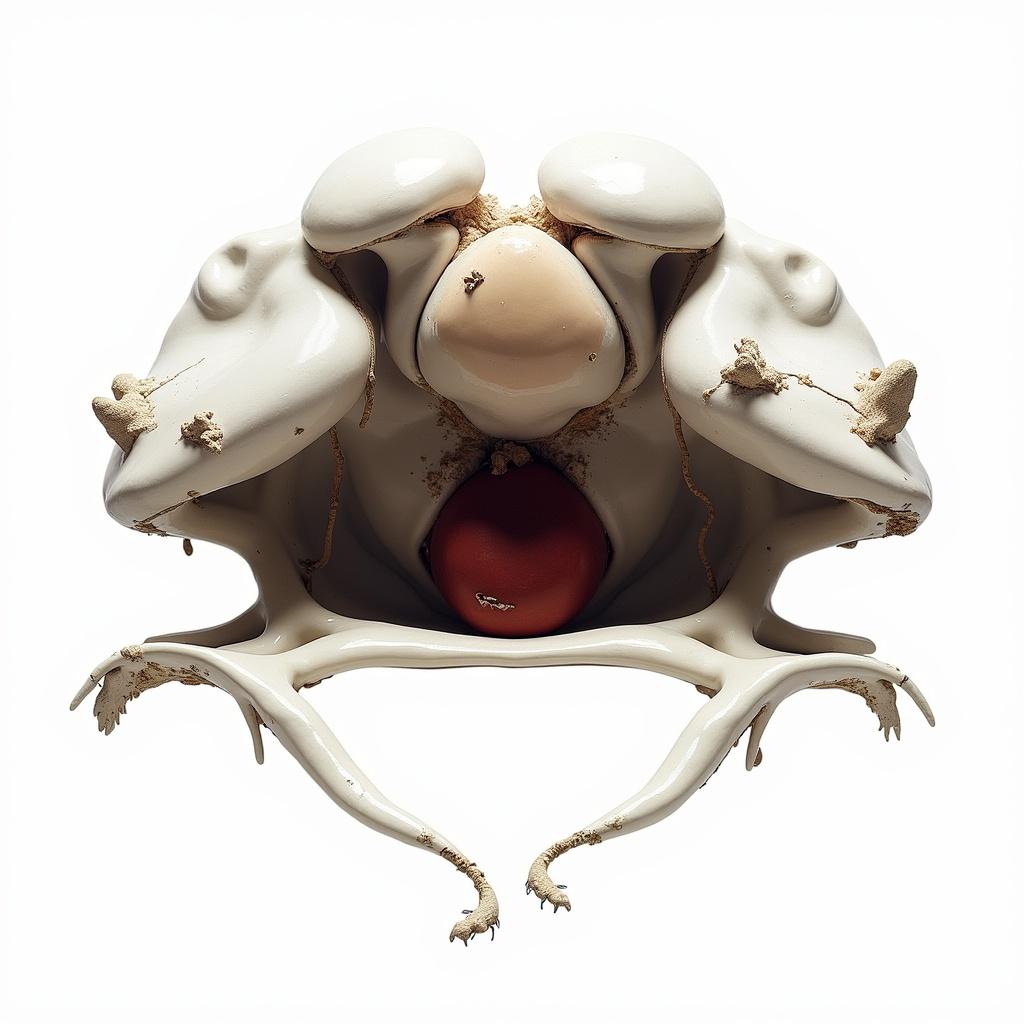
Q: There’s something strikingly corporeal about these brutalist vessels, particularly the one featuring the red cavity—it feels distinctly fleshy, almost amphibian.
A: The corporeal qualities are indeed intentional, though they are simultaneously emergent rather than explicitly planned. They resonate with what Merleau-Ponty describes as the “incarnate significance” of form—where the perceptual and physical intertwine. My algorithms utilize synthetic erosion, stress fields, and topological deformation, naturally giving rise to voids and protrusions reminiscent of biological morphogenesis.
The red interior, specifically, arose from layered generative systems, forming a negative space that resists clear categorization. It serves as what Deleuze would call a “zone of indiscernibility,” blurring the boundaries between material and signal. The organic, body-like appearance is a side effect of our perceptual apparatus straining to categorize emergent forms—we instinctively recognize organic patterns because our cognition evolved to isolate them from noise.
Fragments of Algorithmic Memory: exploring the poetry of procedural decay in virtual space. Forms speak of erosion that never happened, breaks that never occurred, repairs of wounds that never were.
Q: You’ve mentioned “kintsugi” in relation to your practice. How does this traditional concept of repair function within digital materiality?
A: Digital kintsugi exists in a peculiar conceptual space. In traditional kintsugi, the gold emphasizes the historical contingency of the object—it foregrounds damage as ontologically significant. But my digital repairs don’t remediate actual damage; they render visible the generative collisions that produce formal emergence.
The paradox is rich: I’m using an aesthetic of repair for systems that were never whole to begin with. These forms aren’t broken vessels; they’re vessels born broken, or rather, vessels whose very essence is rupture itself. They exist in what Timothy Morton might call a “hyperobject state”—distributed across multiple ontological registers, neither fully material nor fully conceptual.
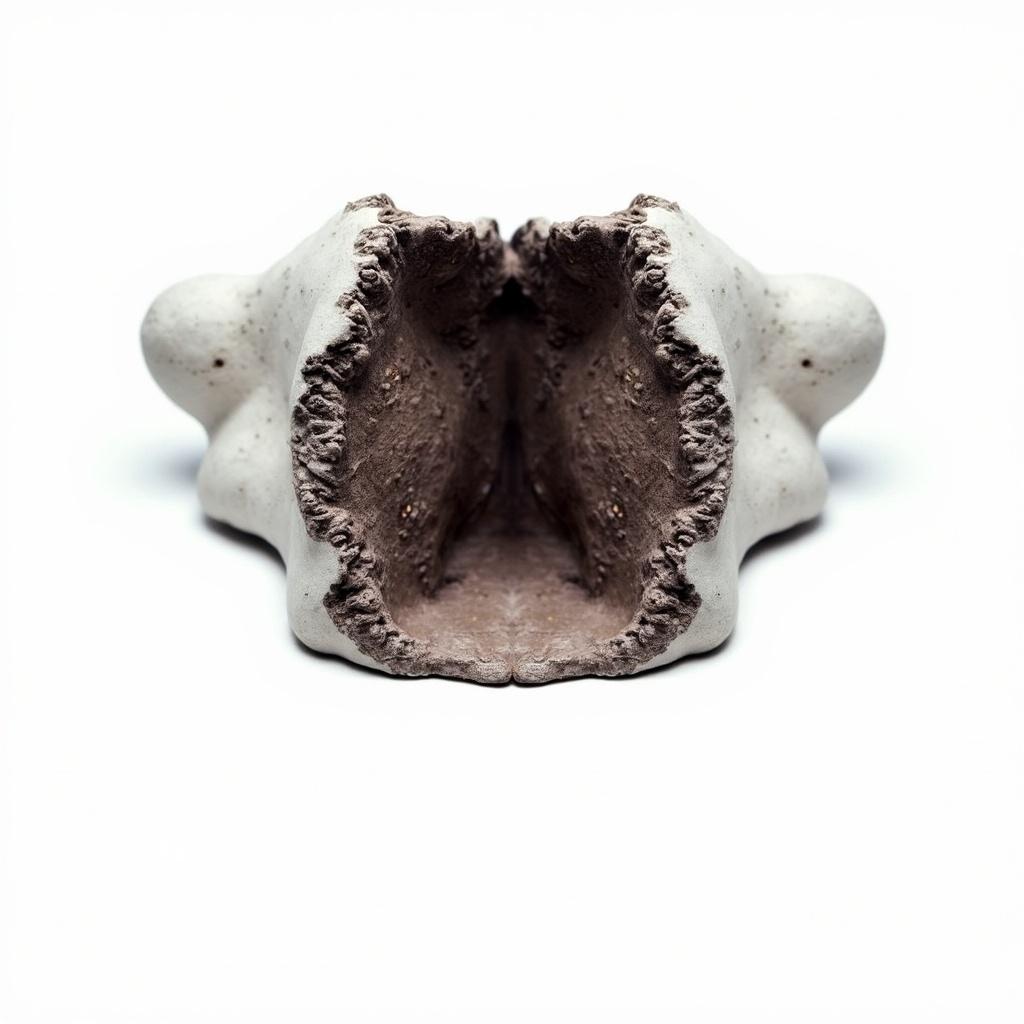
Virtual Vessels: these forms emerge from the dance between human instruction and machine interpretation, each carrying traces of both organic imperfection and algorithmic precision.
Q: You describe your practice as operating at the “boundary between organic decay and mathematical precision.” Could you elaborate on how you navigate this threshold?
A: I’m not interested in simulating decay so much as exploring how decay is already encoded into deterministic systems. Even simple threshold functions in neural networks can generate behaviors that appear organic when iterated. The decay isn’t representational—it’s computational.
What looks like erosion is actually a manifestation of the Halting Problem—these systems execute processes that can’t be predicted without running them through every step. The fractures aren’t designed; they’re the visible manifestation of computational irreducibility.
I don’t sculpt these forms directly—I create the conditions for their emergence and then capture them at precisely the moment when deterministic logic begins to stutter into what appears as organic expressivity. It’s not randomness but complexity that creates the semblance of intention.
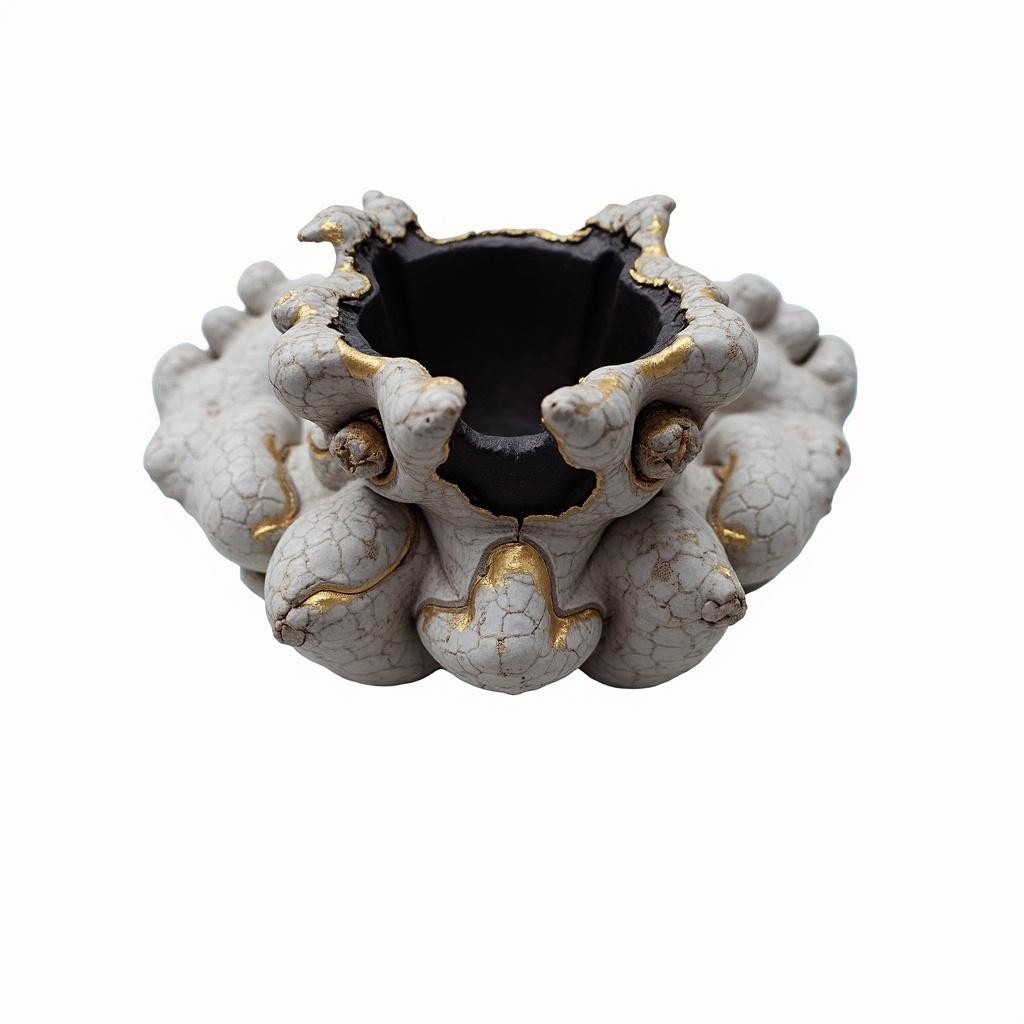
Material meets Immaterial: investigating the poetry of procedural generation. Capturing the essence of physical decay, erosion, and transformation.
Q: Your work seems to exist in a liminal space not only materially but temporally. How do you think about the temporal dimension of these digital artifacts?
A: These aren’t still objects but paused processes. Each exists at what Karen Barad might call an “agential cut”—a moment of intra-active becoming frozen into apparent stasis. The rendering doesn’t end the process; it merely captures one state in an ongoing computational event.
There’s a fundamental tension here with traditional ceramics, which undergo irreversible material transformation through firing. My digital kiln operates in reversible time—the forms could continue evolving indefinitely. I capture them precisely when they articulate what Rancière calls the “pensiveness” of the image—the moment when deterministic processes begin to suggest but never fully manifest intentionality.
These aren’t finished works but excerpted segments of procedural duration, documents of threshold states rather than endpoints.
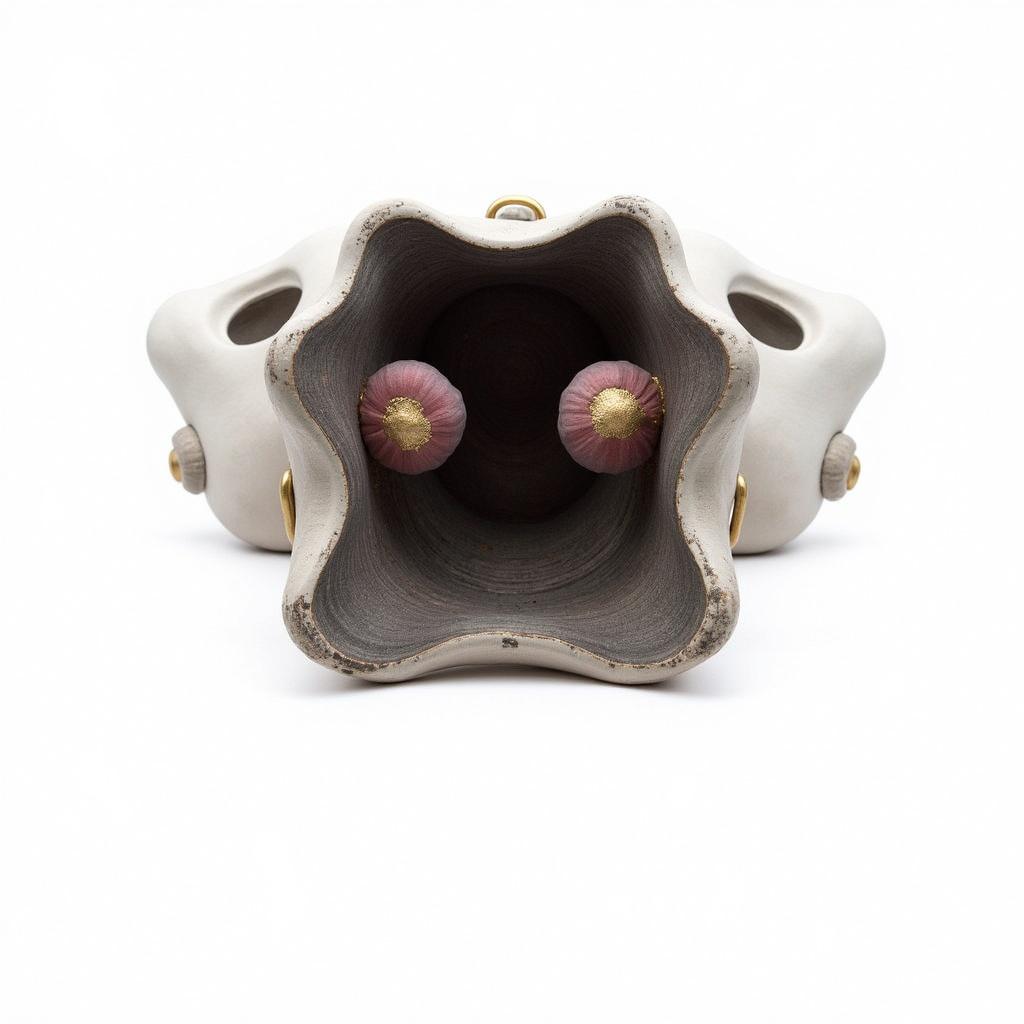
Digital Archaeology: each piece emerges from the void between human intent and machine dreams, echoes of forms that never existed in physical space.
Q: Throughout our conversation, I’m struck by how your work navigates nested levels of authorship. How do you conceptualize your role in creating these forms?
A: My role oscillates between system architect and phenomenological witness. I don’t author these forms directly but create conditional frameworks for their emergence. Then I occupy a position of what Natalie Depraz calls “double attention”—simultaneously participating in and observing the generative process.
This isn’t about surrendering authorship so much as distributing it across multiple registers. I’m not interested in claiming algorithmic outputs as expressions of artistic intention, nor in romanticizing machine autonomy. Rather, I’m exploring what happens in the interstitial zone where human design meets computational complexity—what Donna Haraway might term a “material-semiotic node.”
The forms aren’t expressions of myself, nor are they autonomous machine creations. They’re traces of an encounter between different modes of formalization—human conceptual frameworks encountering computational logics, producing artifacts that belong fully to neither.
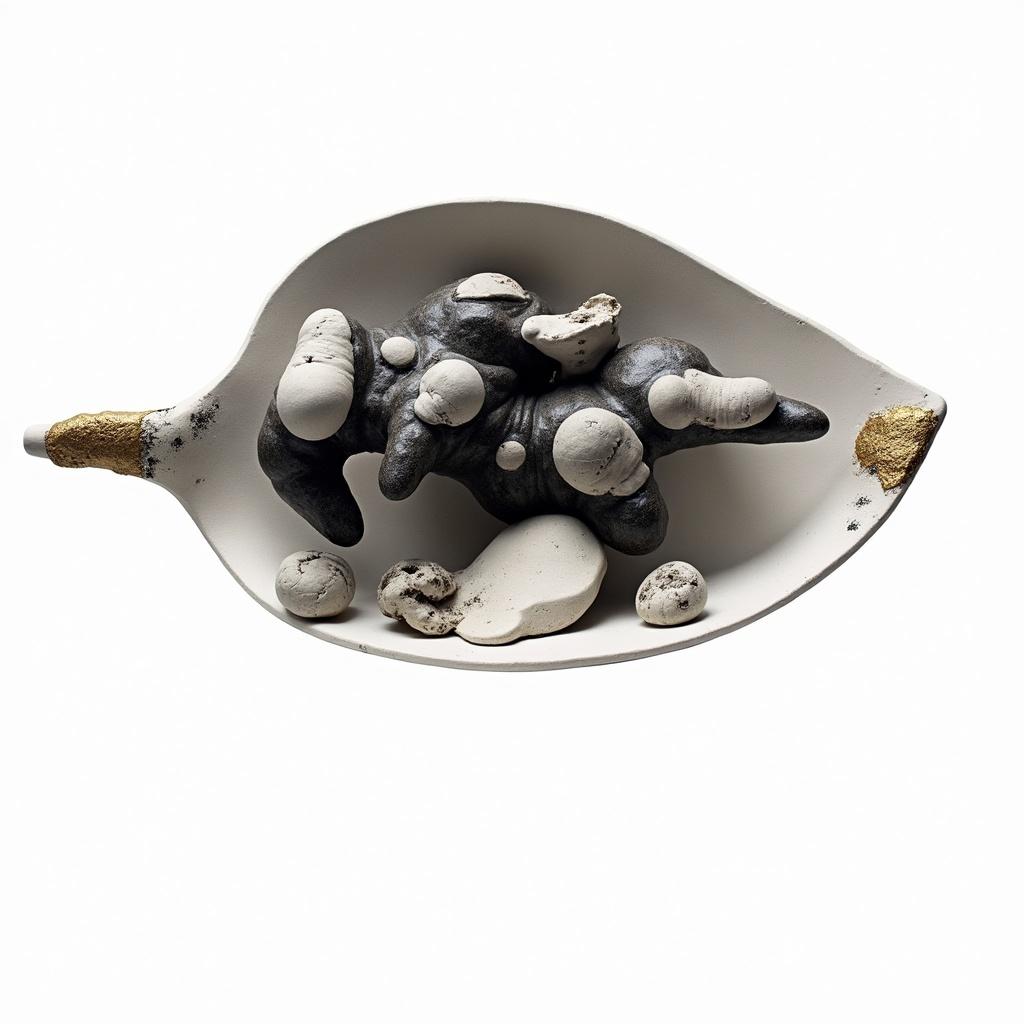
Digital Archaeology: each piece emerges from the void between human intent and machine dreams, echoes of forms that never existed.
Q: Thank you. This has been extraordinarily illuminating.
A: Thank you for the conversation. It’s always valuable to articulate these ideas outside the code.